
What is it?
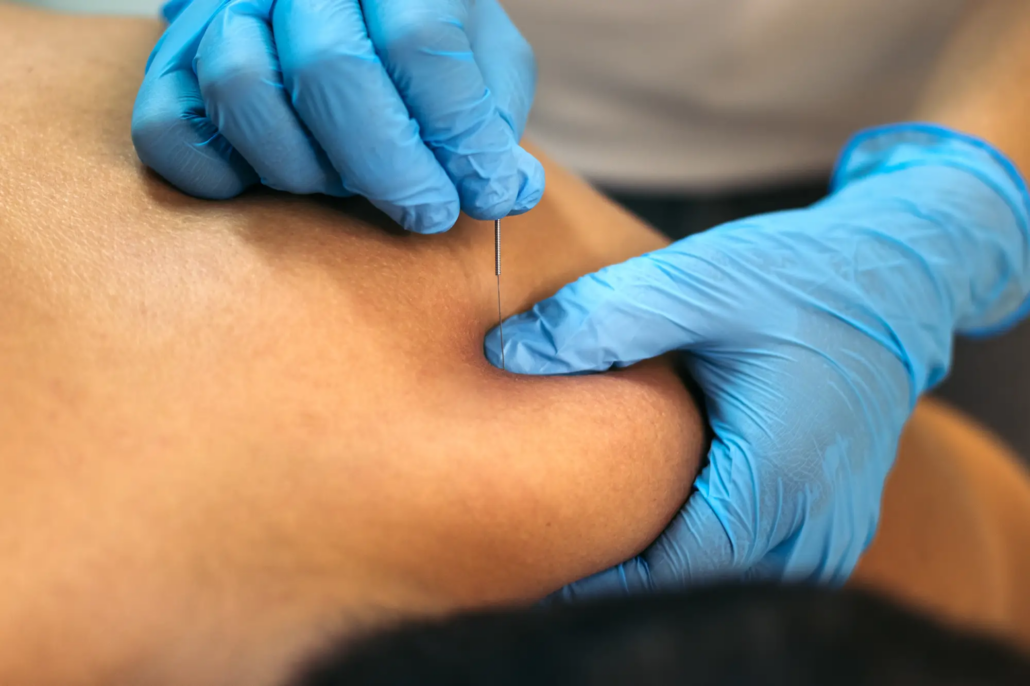
Dry Needling is an intervention that uses fine, disposable needles that are inserted into the trigger points (“knots”) of muscles.
Trigger points are a “hyper irritable spots within a taut band of skeletal muscle that is painful on compression, stretch, overload or contraction of tissue, which usually responds with a referred pain that is perceived from the spot”.
For example, commonly in people’s upper shoulders/neck they may have “knots”, theses can be sore on compression and can refer pain up into your head resulting in headaches.
Dry Needling vs. Acupuncture
Acupuncture is based on traditional Chinese medicine. It is based on the belief of the human body having 12 major pathways called meridians each linked to different body systems and organs. Needles are inserted at certain acupuncture points to restore the balance of energy. When unbalanced it is believed to cause pain and illness.
Whereas dry needling targets anatomically based areas like muscles to treat trigger points. Trigger points can develop due to things like posture, repetitive activity, sustained overuse, acute injury/trauma, chronic injury/pain and psychological/emotional stress. These trigger points can cause symptoms like aching, fatigue, muscle weakness, tenderness, muscle stiffness, deep/non-specific pain and reduced range of movement.
Benefits of Dry Needling:
● Deactivates trigger points, allowing the muscle to relax and lengthen.
● Stimulates the release of pain-relieving chemicals, that blocks pathways that relay pain messages from the body to the brain.
● Increases local circulation to the muscles which promotes healing.
What to expect?
When the needle is inserted you may experience a pricking type sensation. You may then develop an aching sensation which is an indication that the body’s pain-relieving mechanisms are being stimulated. Some trigger points that are inserted with a needle may elicit a twitch response (“spasm”), which is a sign that the needle is in the affected area.
Depending on your tolerance/symptoms, past dry needling experiences and previous outcomes, the therapist may stimulate the needle more to bring on more of these symptoms. They may use more needles, leave them in for longer or move them around more as well.
Contraindications/Precautions
Some patients due to health conditions, other injuries and particular medications may not be suitable for dry needling, or it may be done at the discretion of the therapist’s informed opinion.
These contraindications/precautions include:
● Skin eruptions/complaints, including inflamed tissue.
● Non-diagnosed skin complaints.
● Skin growths, ganglia, tumours, cancers.
● Patients with blood clotting disorders
● Patients on Warfarin or other blood modifying medications.
● Patients on medication that do or may affect immunity.
● Patients with impaired immunity.
● Very heavy smokers.
● Vitamin C deficiency.
● Patients with needle phobias
● Patients with fainting tendencies.
● Patients suffering from fever, influenza or other infectious diseases.
Your therapist will discuss these things with you prior to treatment and any concerns you may have.
Pregnancy – research has proven dry needling to be quite safe during pregnancy. Please inform your therapist if you are pregnant so we can discuss the pros and cons of dry needling further.
Sam offers dry needling as one of her physiotherapy interventions. If you are wondering if dry needling may be suitable for your condition/injury, have a chat with Sam next time you are in or book in for a physiotherapy appointment.
Dry needling is not a stand alone treatment, so Sam will discuss with you if it is appropriate for your condition/injury and also use other interventions/home exercise programme to help with your rehabilitation too!
